
Bloom
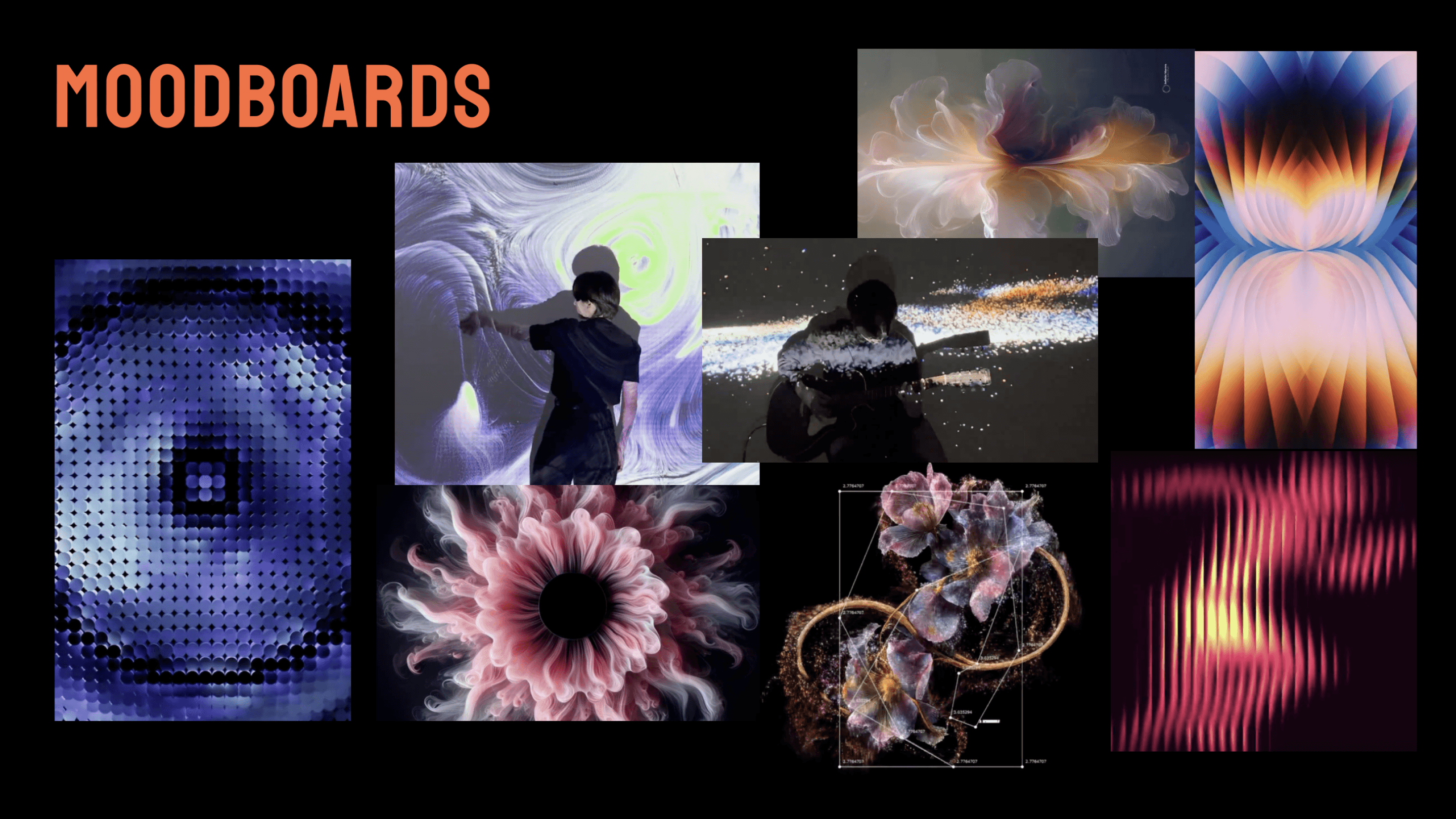
To create a virtual space where sound could shape visual behavior in real time, Bloom was developed as an interactive audio-reactive art installation. Inspired by an interest in how music and rhythm influence emotion, the project explored how sound could act as a design input rather than a trigger.
Timeline
3 weeks
Role
Interaction Designer
Team
Purva, Yash, Parth, Prof. Crystal
Skills
Touch Designer, Interaction Design, Audio Reactivity, Particle Systems, Generative Visuals, Python, MIDI Control, Real-Time Systems, Live Performance.
Problem
How might we design a virtual installation where visuals feel organic, responsive, and musically aware, moving with sound rather than reacting to it?
Outcome
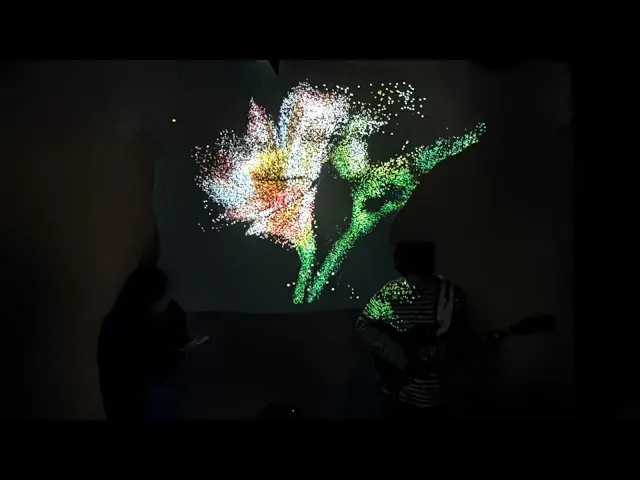
We built an audio-reactive flower installation where three flower visuals evolve through distinct phases and respond in real time to music. Using TouchDesigner, particle systems, MIDI controls, and audio analysis (including kicks and snares), the installation was designed as a living visual system rather than a pre-rendered animation.
Final Design
The Live Audio-Reactive Experience
Bloom Interactions
Bloom is a live, audio-reactive flower system built with particle systems that evolves through distinct visual phases.
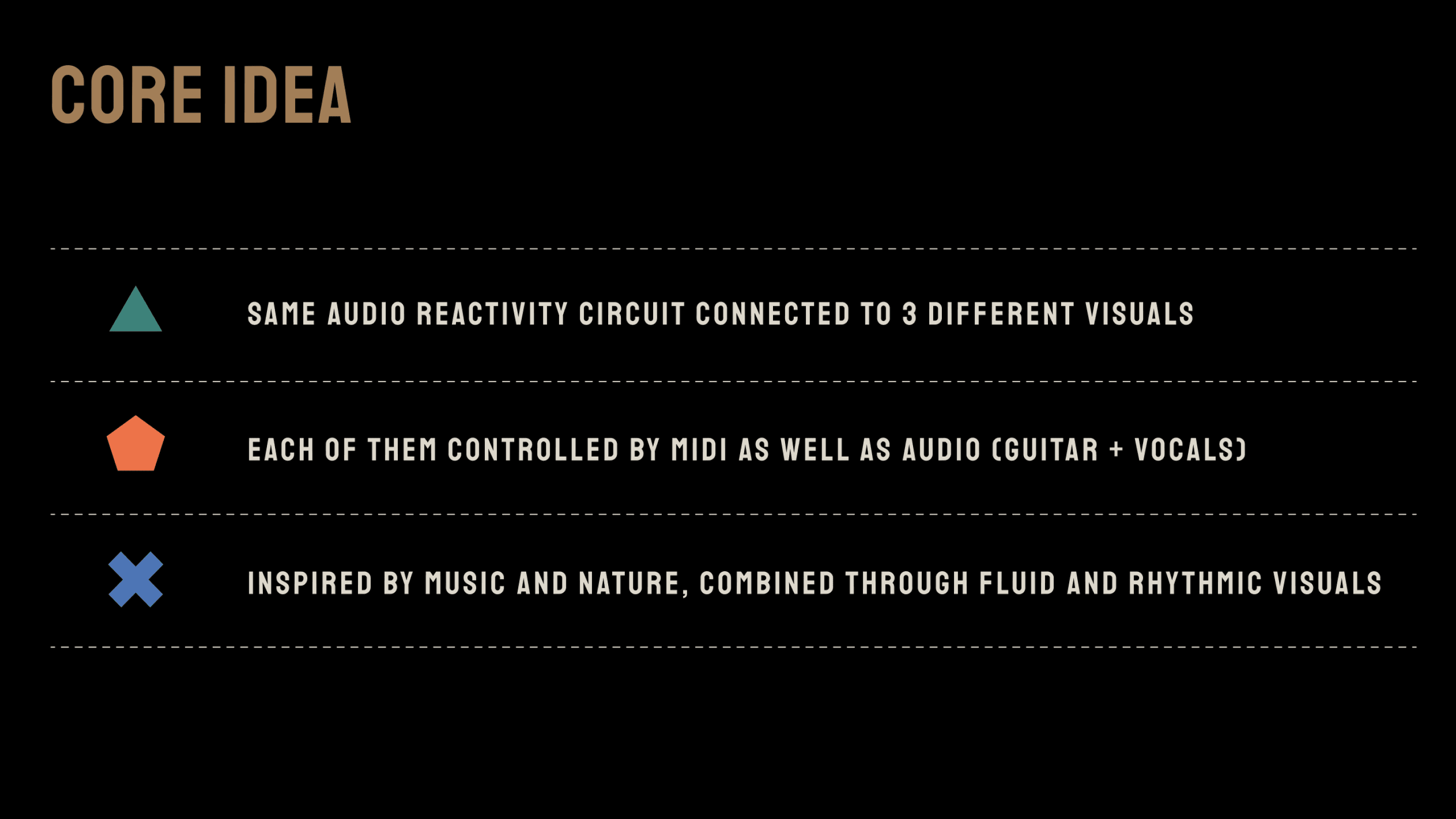
Kicks and snares are mapped to different behaviors, allowing the visuals to respond to musical rhythm rather than raw volume.
A MIDI controller enables real-time performance control, turning the installation into a playable visual instrument.

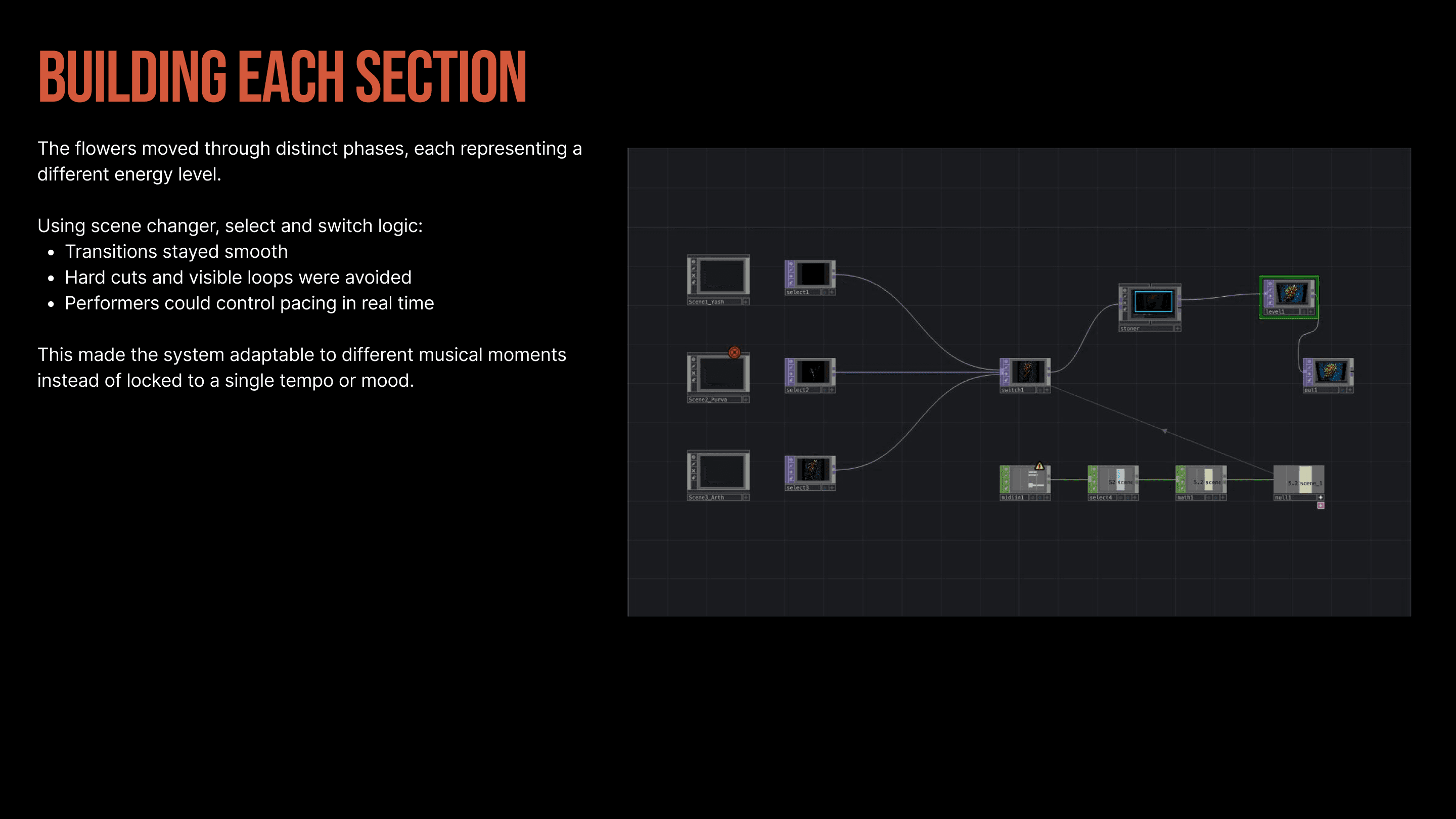
Scene 1
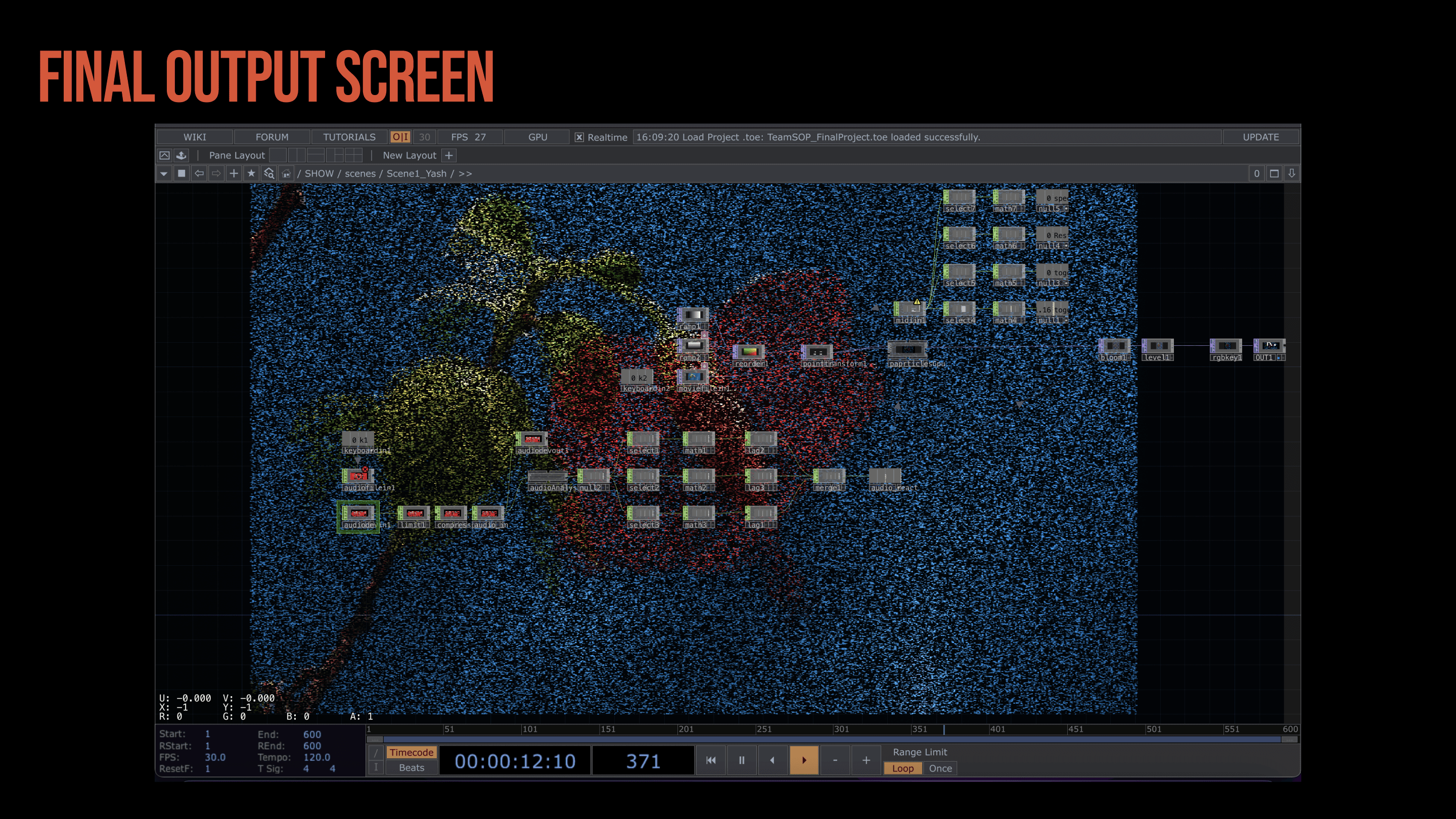
Responds primarily to low-frequency kicks, driving structural expansion and particle density. It forms the grounding visual layer, setting the rhythm and pace of the system. Audio input - Guitar

Scene 2
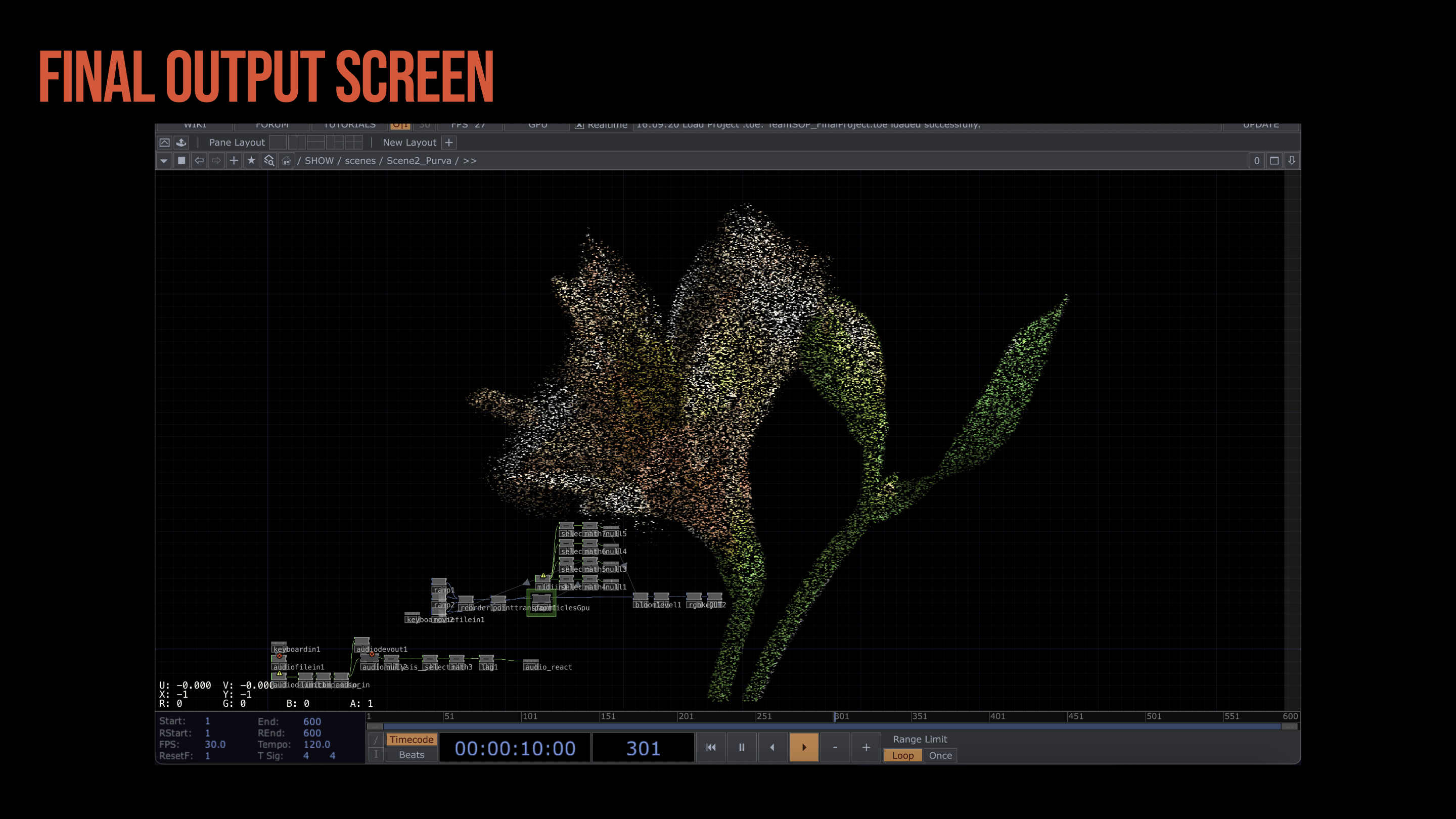
Reacts to mid-range elements like snares through sharp micro-movements and directional shifts. Audio input - Mic and Guitar

Scene 3
Evolves through softer, continuous particle motion influenced by overall musical flow. Audio input - Pre-added music
The Process
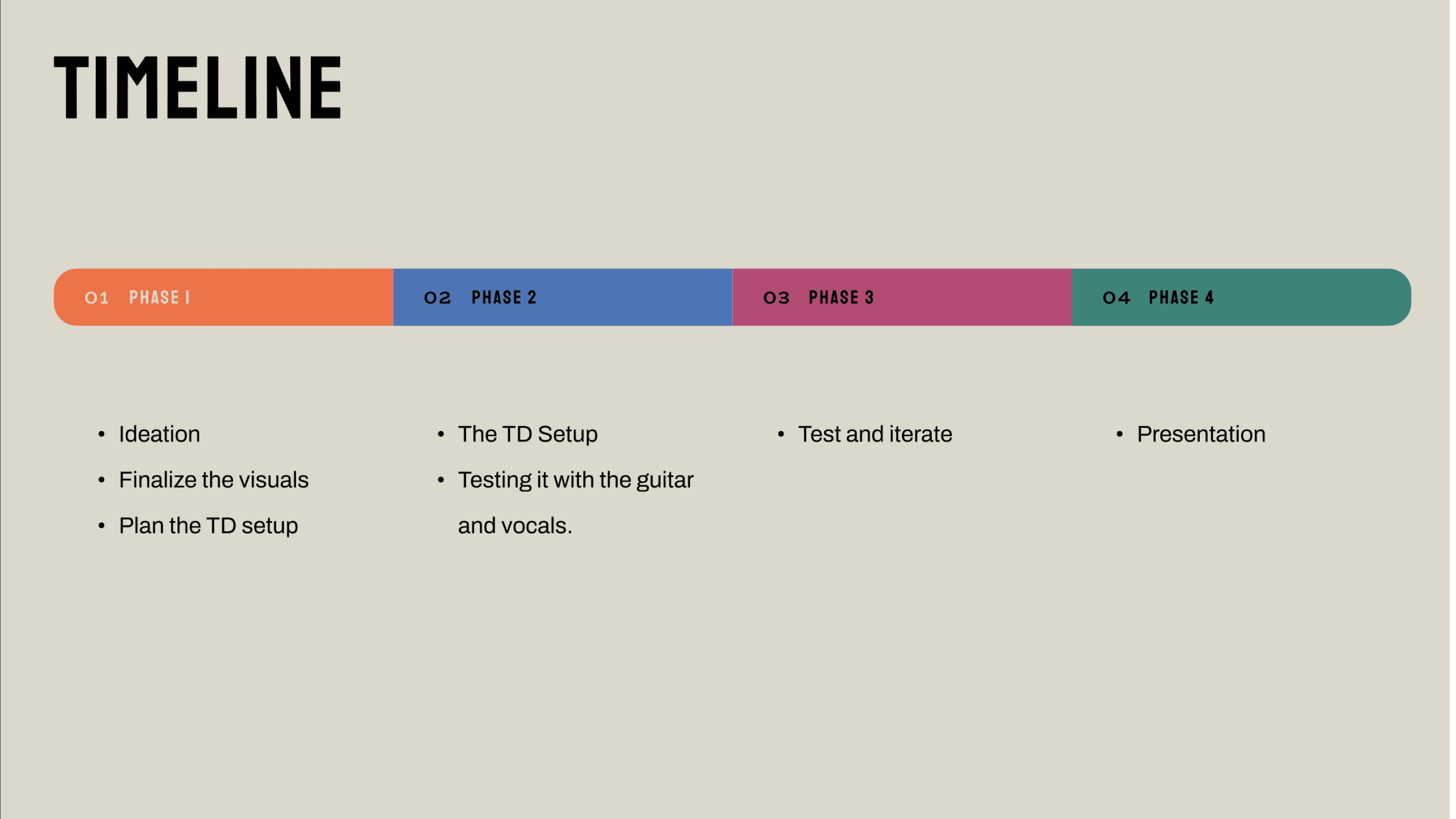
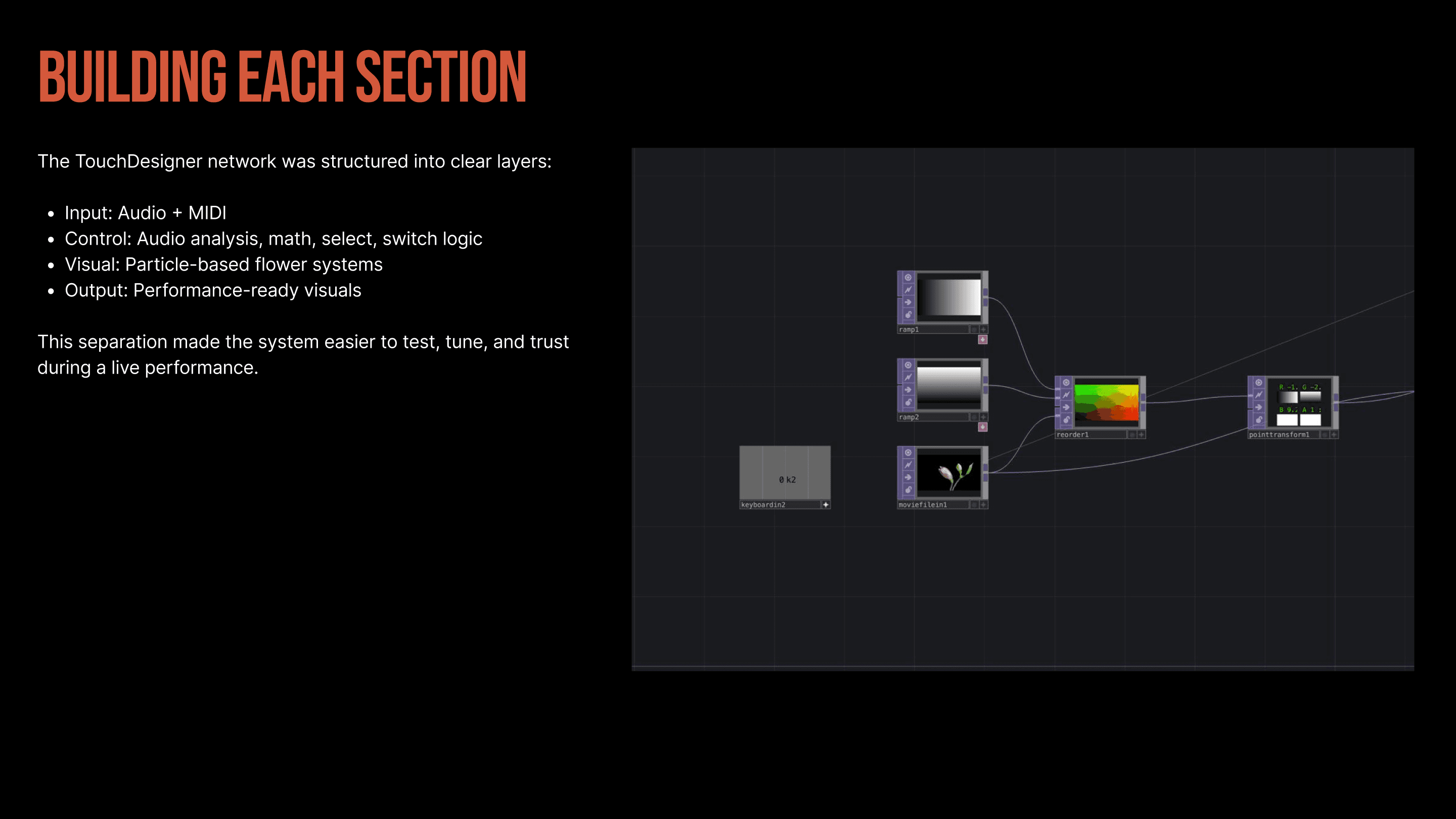
We started with building in small flows to building a whole system
Impact
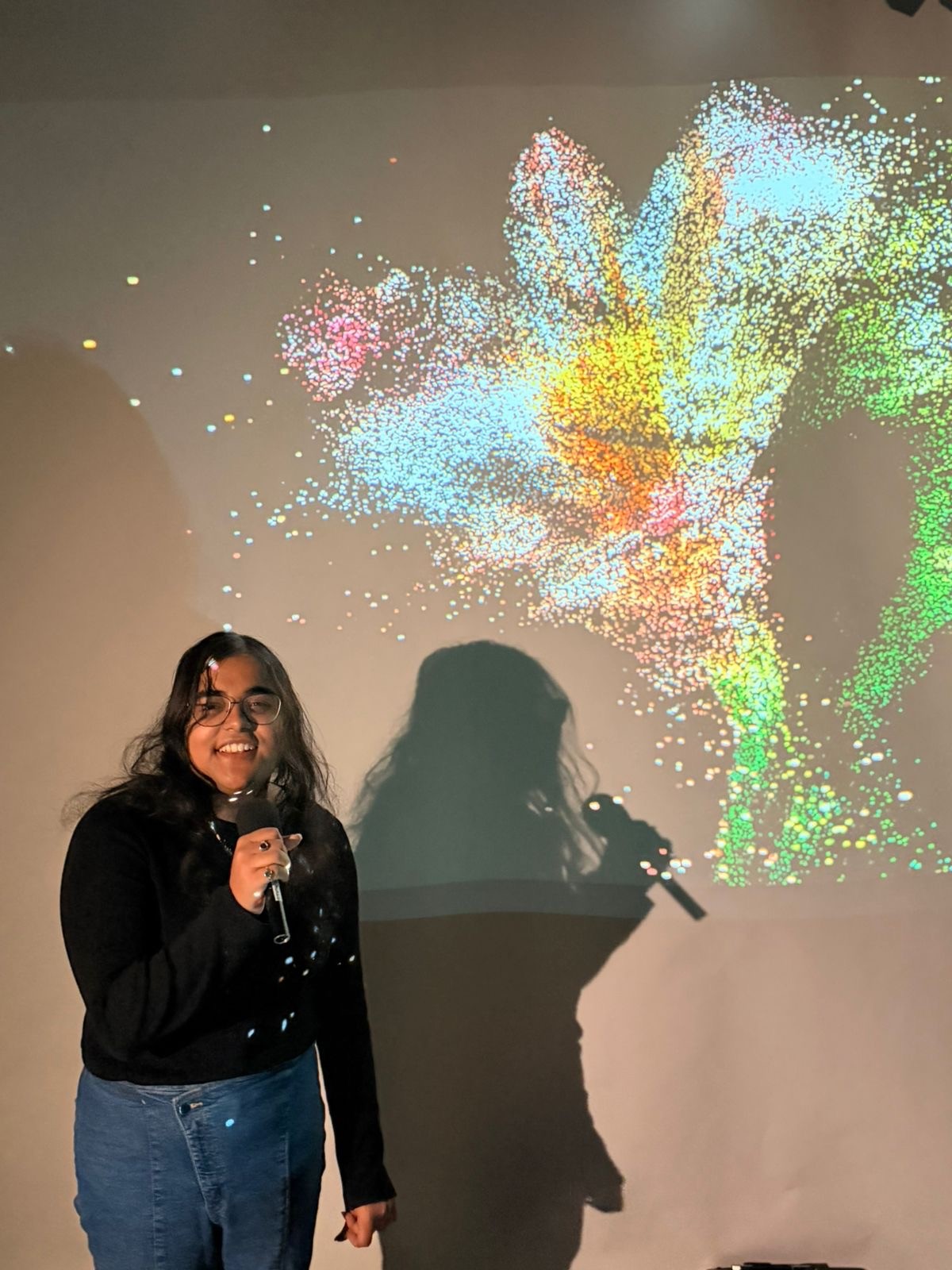
I got to perform with the final installation in a live music performance!
Seeing the system perform live validated:
The modular system architecture
The decision to use particle systems
The separation of rhythmic audio elements
The importance of MIDI control during performance
The visuals didn’t just react, they listened.
Reflections
This project reshaped how I think about interaction design.
Build complex systems layer by layer
Designing everything at once creates fragile setups. Incremental building creates stability.
Interaction design isn’t always about screens
This project strengthened my approach to designing systems that respond to real-time input, whether visual, auditory, or physical.
-UP NEXT-