Coursera
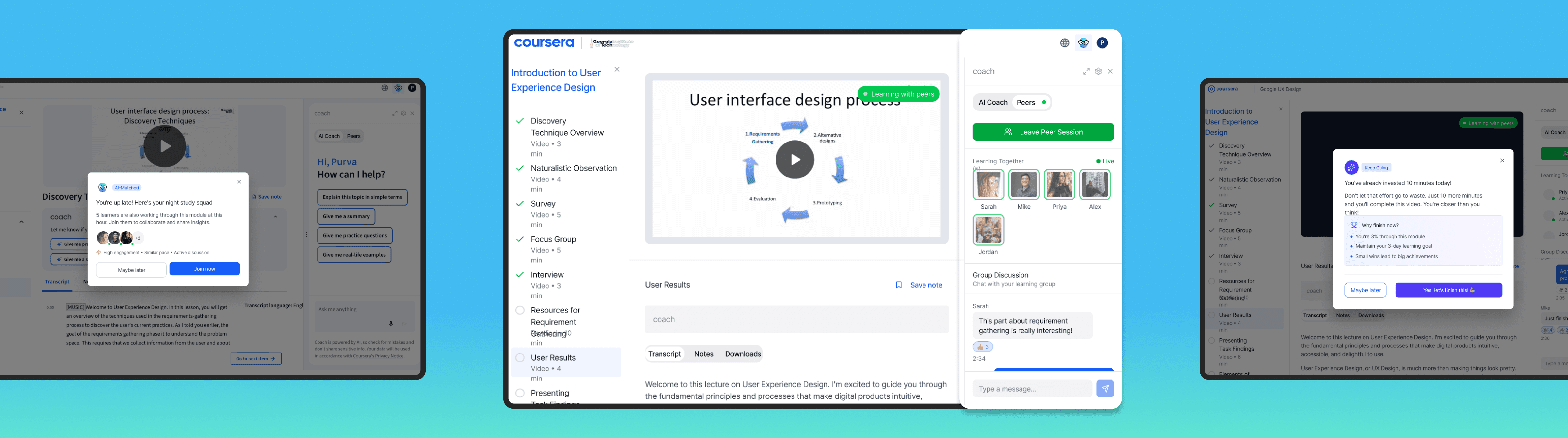
While Coursera excels at delivering high-quality learning content, it falls short in helping learners stay engaged and complete courses in self-paced environments.To bridge the gap between content access and course completion, this project introduces a hyper-personalized learning experience, combining context-aware nudges,and hyper-personalized peer learning system to guide learners through their journey.
Timeline
4 months
Role
UX/UI Designer
Team
Solo
Skills
Conversational AI Design, UX Research, Information Architecture, Prototyping, Interaction Design
Problem
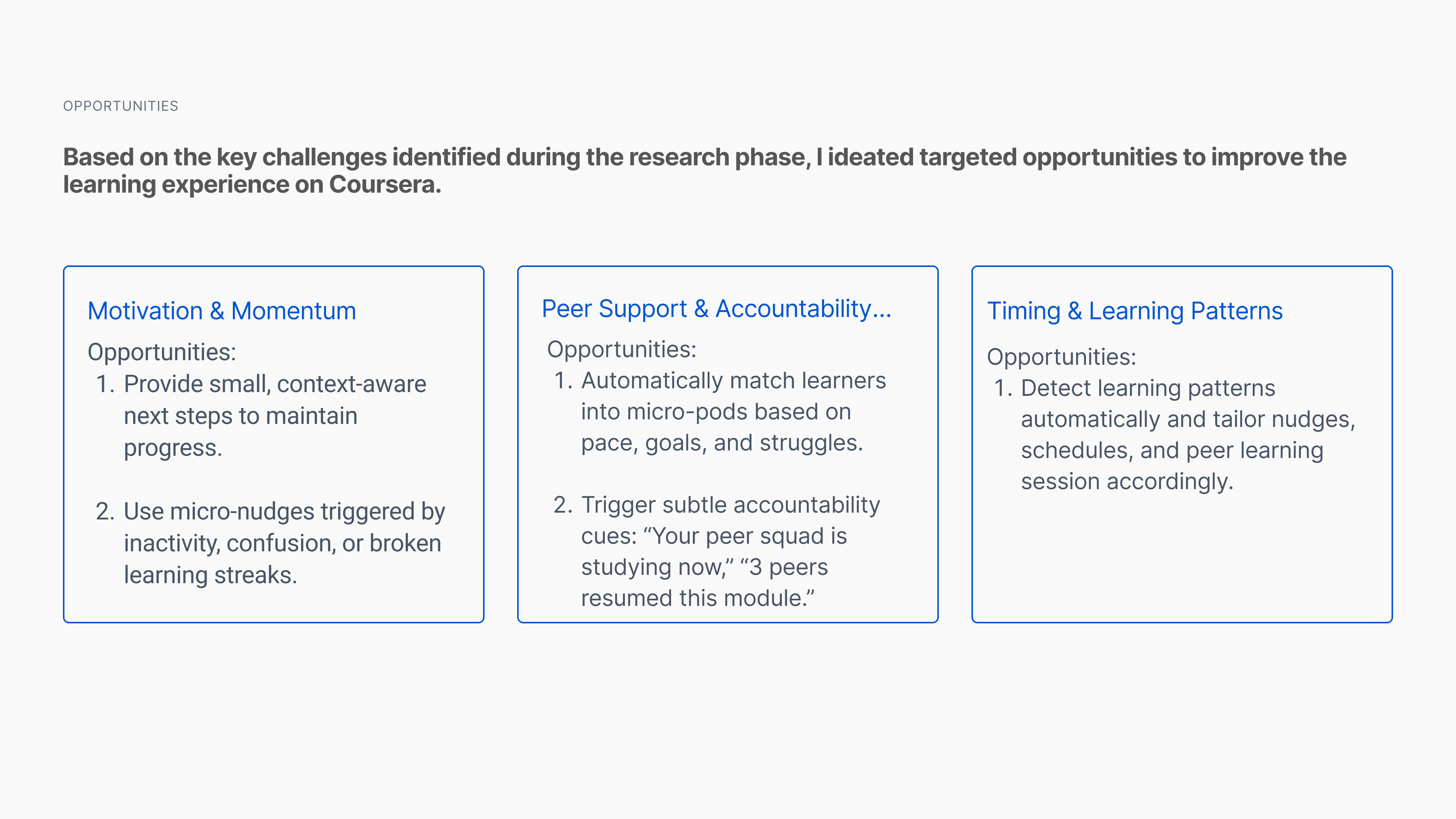
How might we help learners stay engaged and confident in a self-paced learning environment, without overwhelming them?
Outcome
I redesigned Coursera's "My Learning" dashboard with a hyper-personalized system that supports learners through AI-matched peer learning and context-aware nudges.
Final Design
Adapt your learning experience, stay accountable with peers, and keep learning.

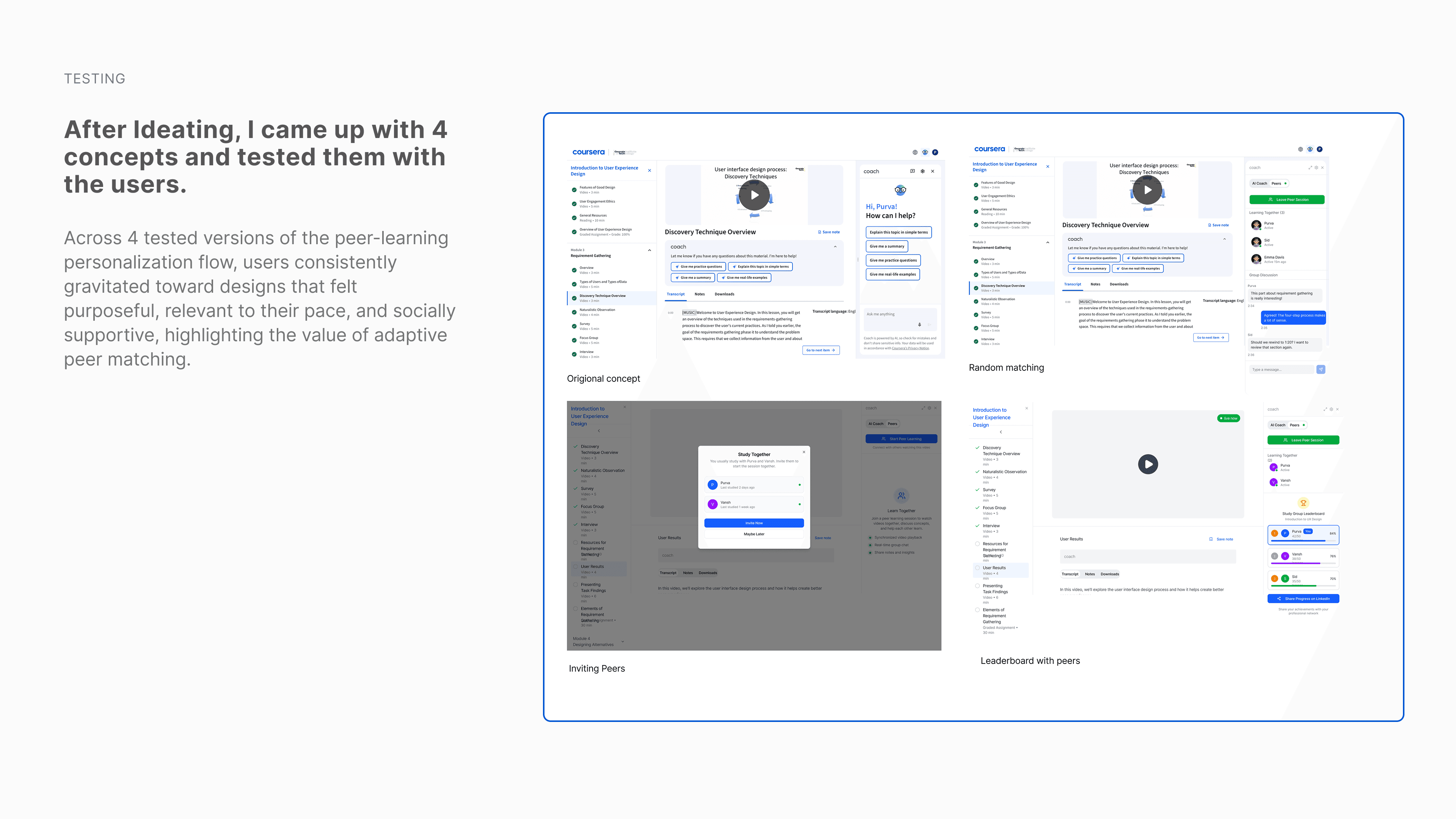
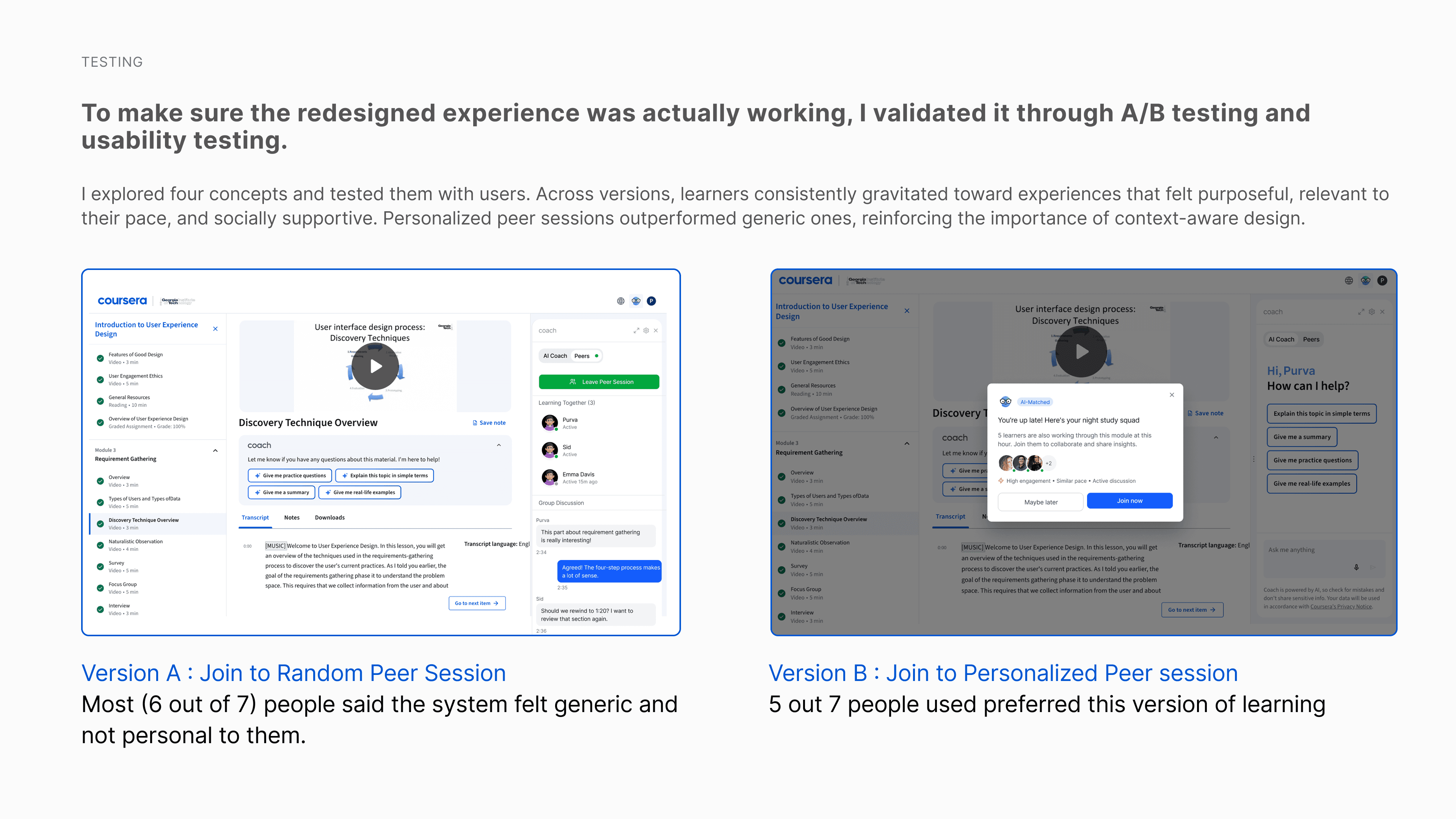
Hyper-Personalized Peer Learning
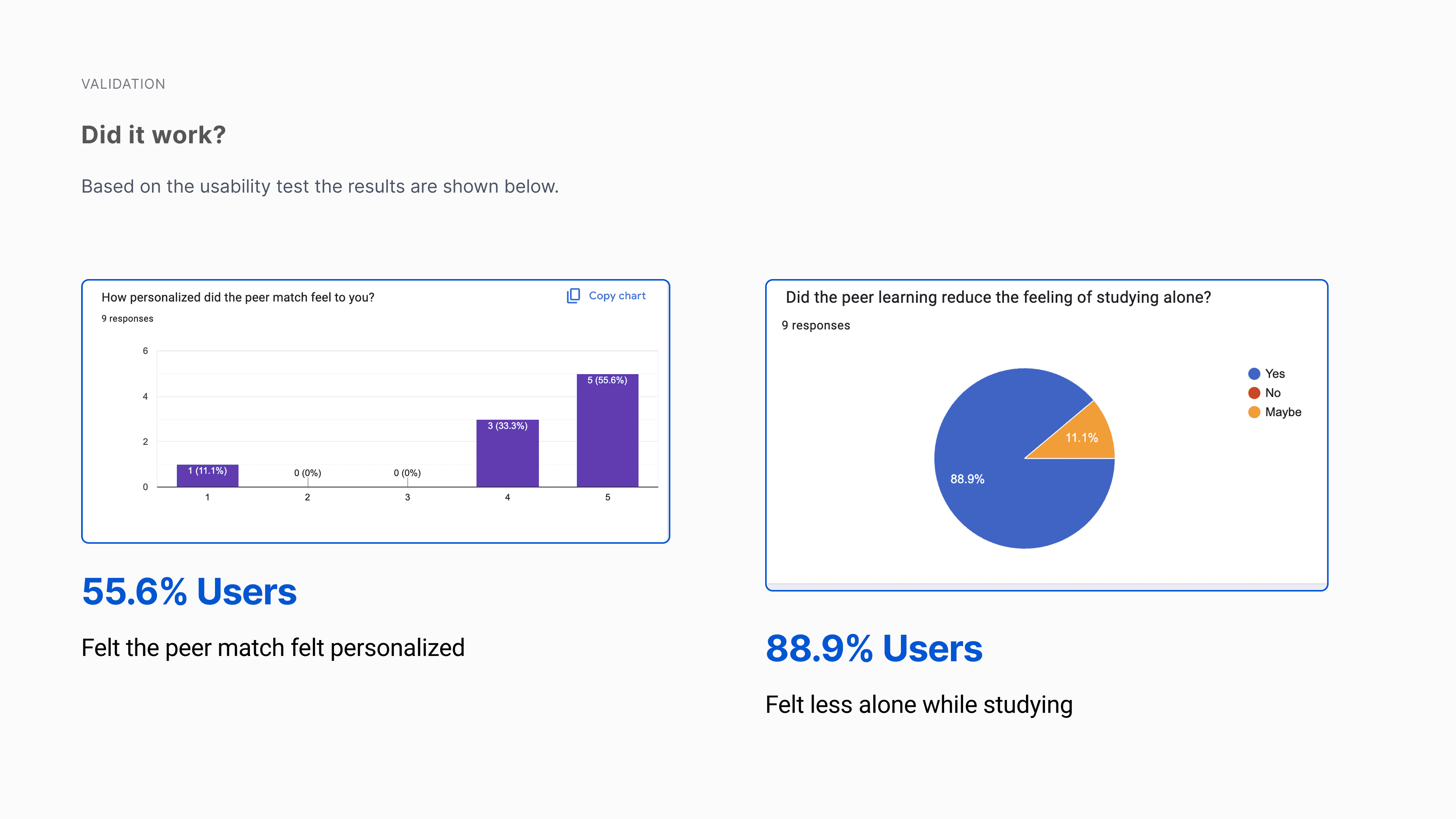
Learners are connected with peers to reduce isolation and create a sense of shared progress.
Rather than large discussion forums, peer learning focuses on small, relevant connections that encourage accountability and motivation throughout the course.
Behaviour Based Nudges
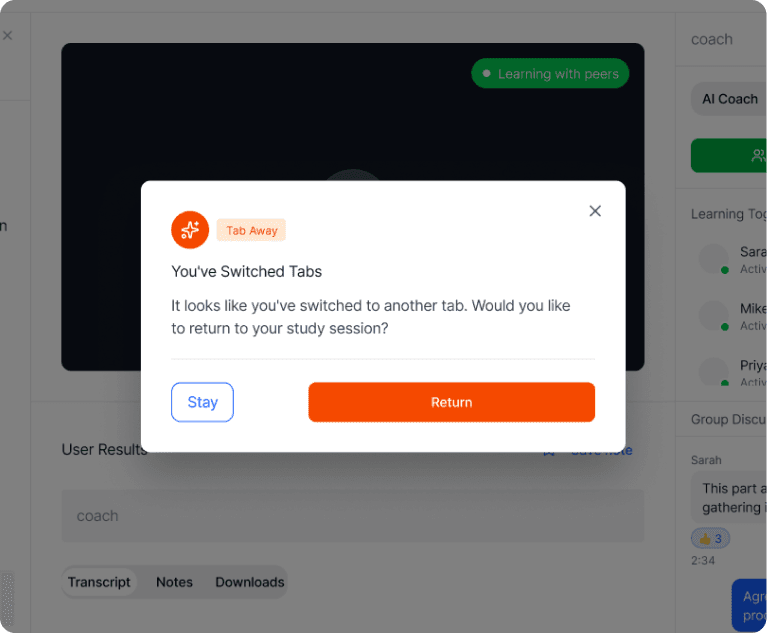
Personalized prompts triggered by learner behavior, such as video rewinds, pauses, or drop-offs, to guide timely next steps.
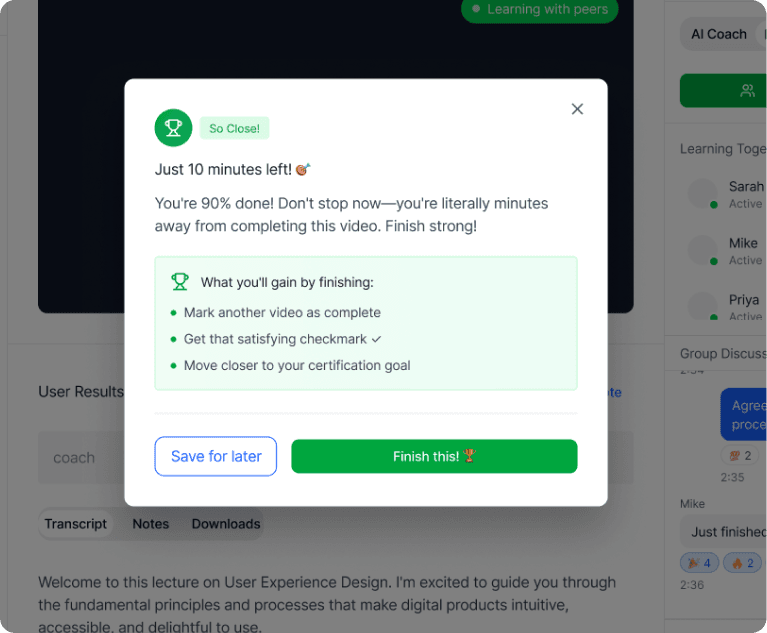
Motivation Feedback Loops
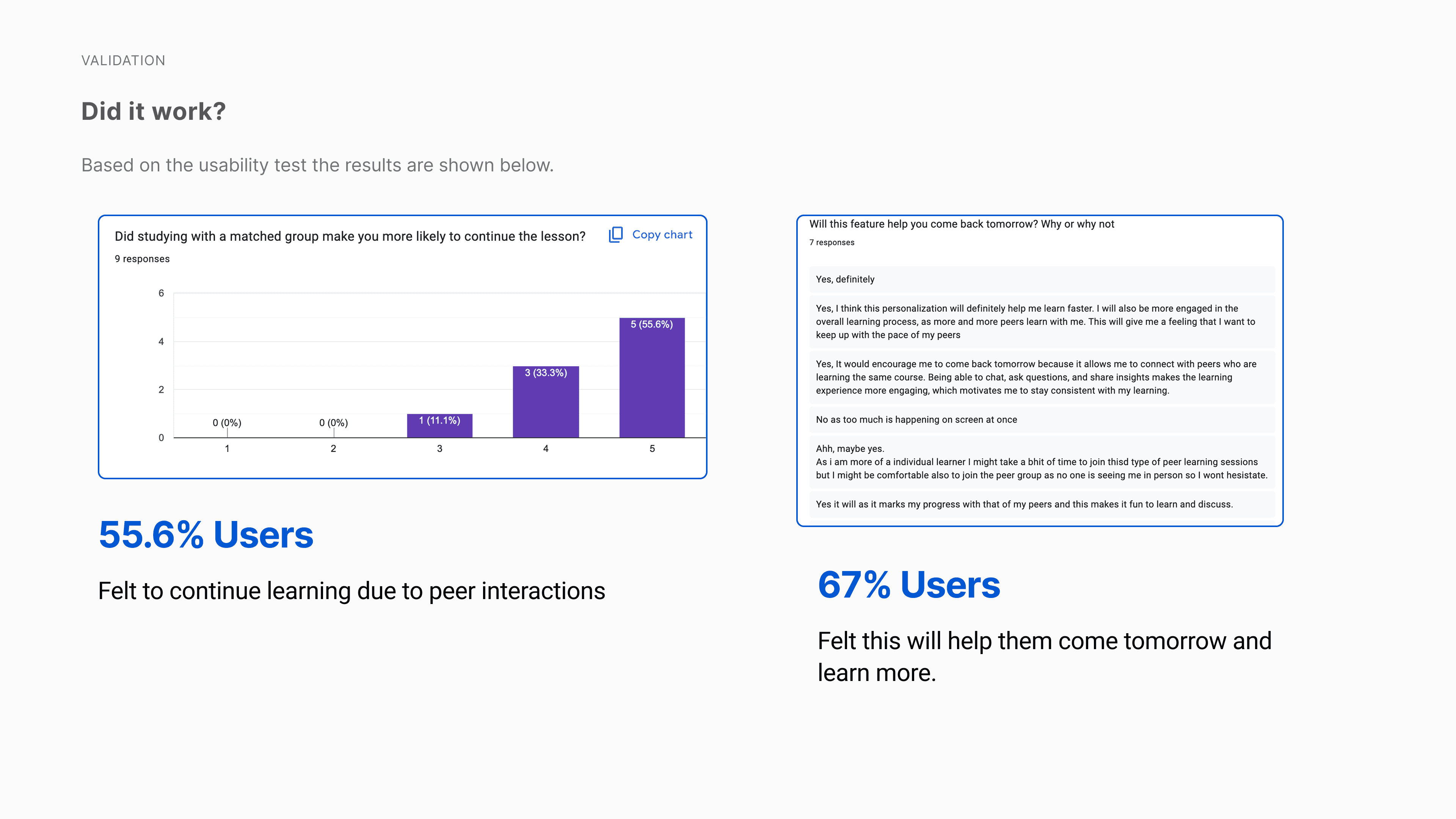
Clear, actionable prompts that suggest what to do next, like resuming a lesson, joining a peer session, or completing a small task.
The Process
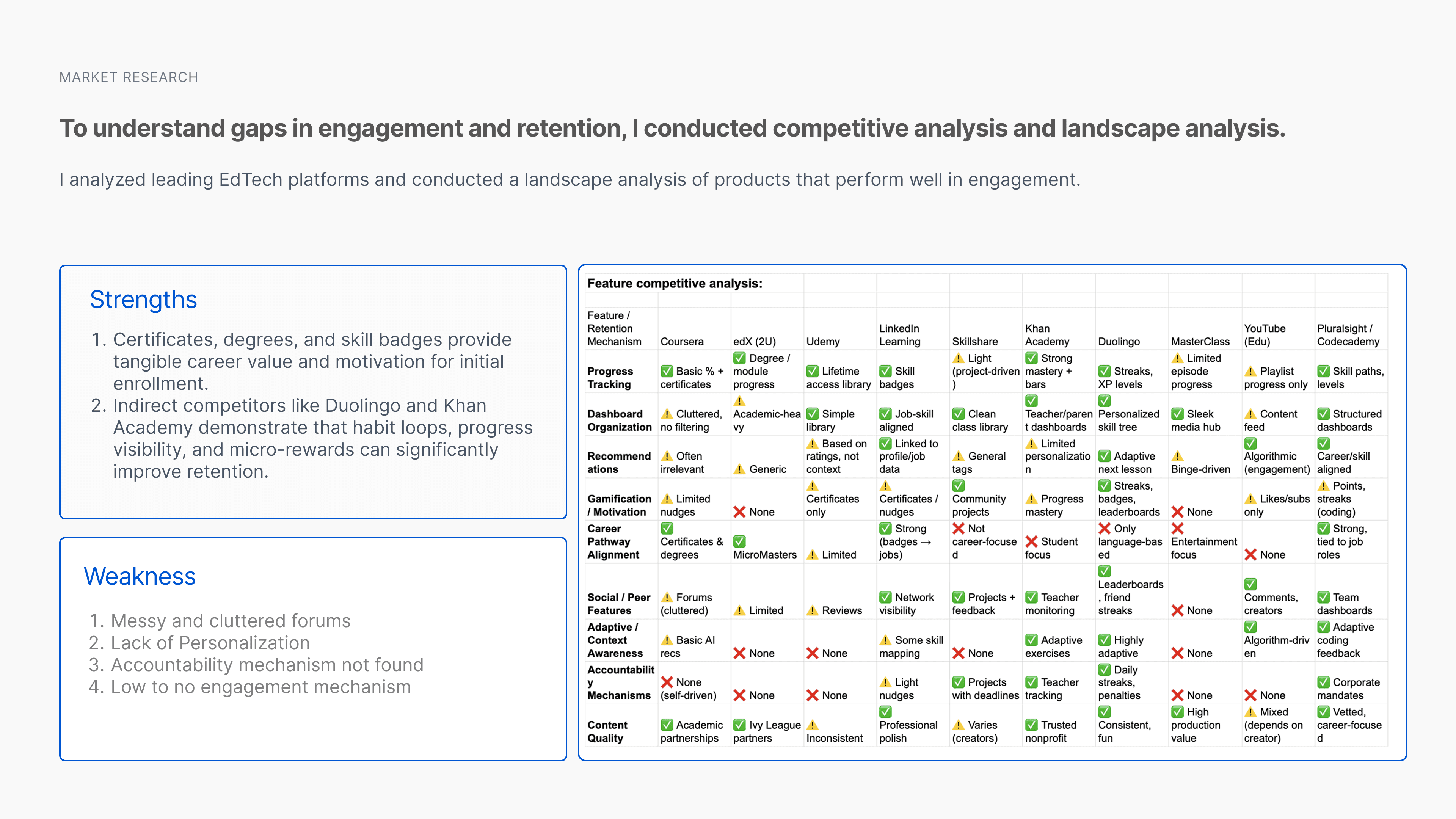
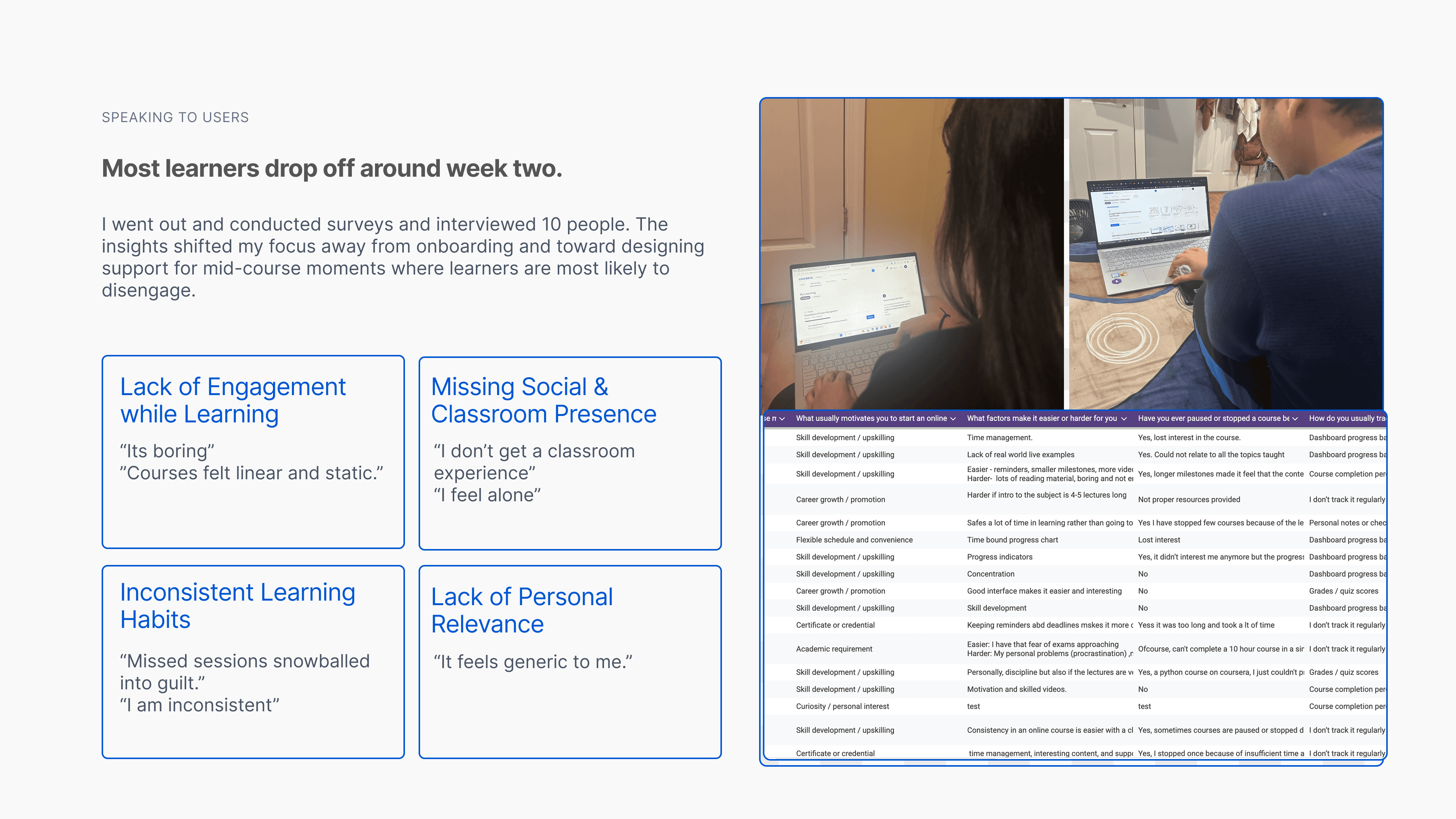
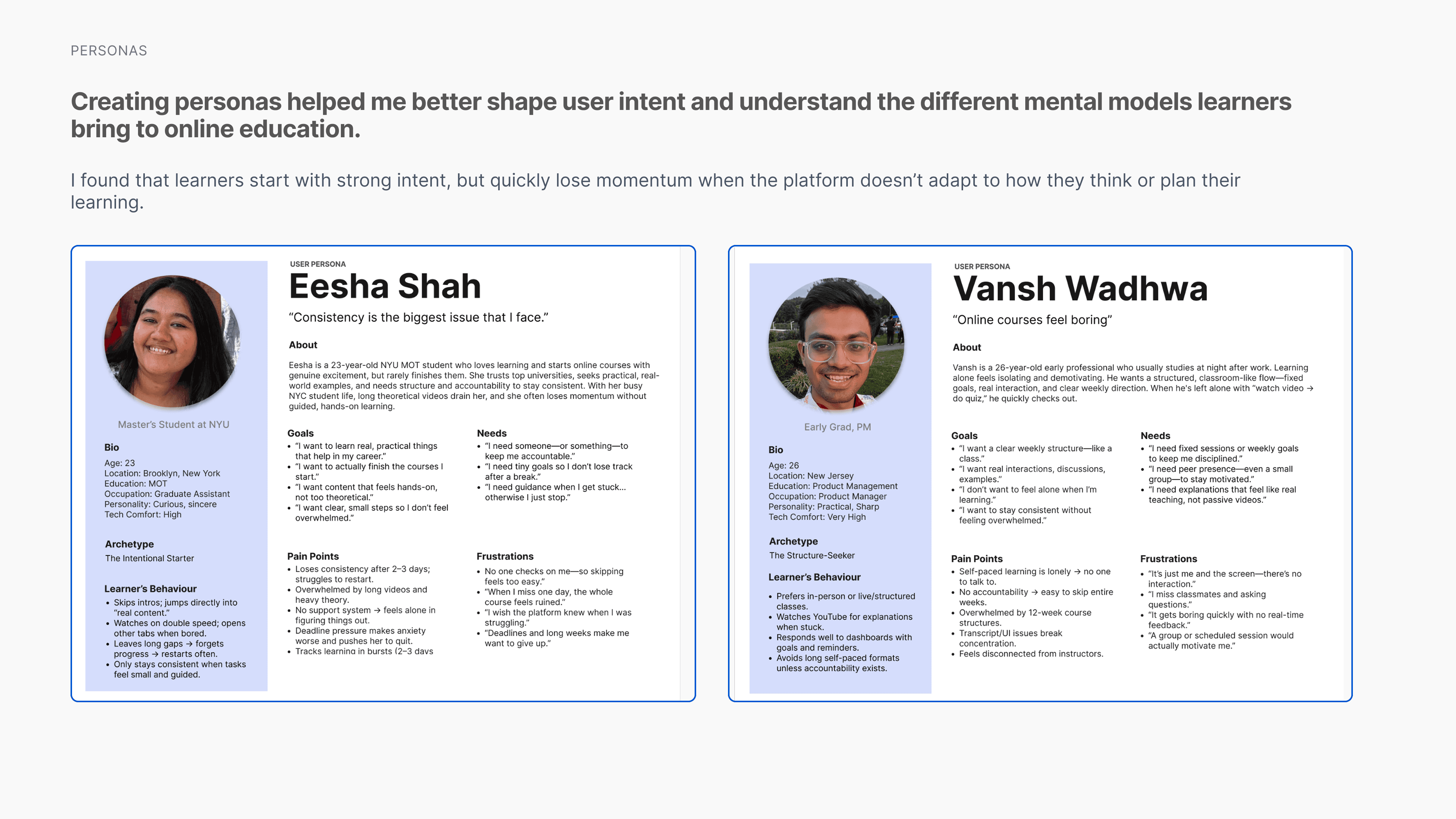
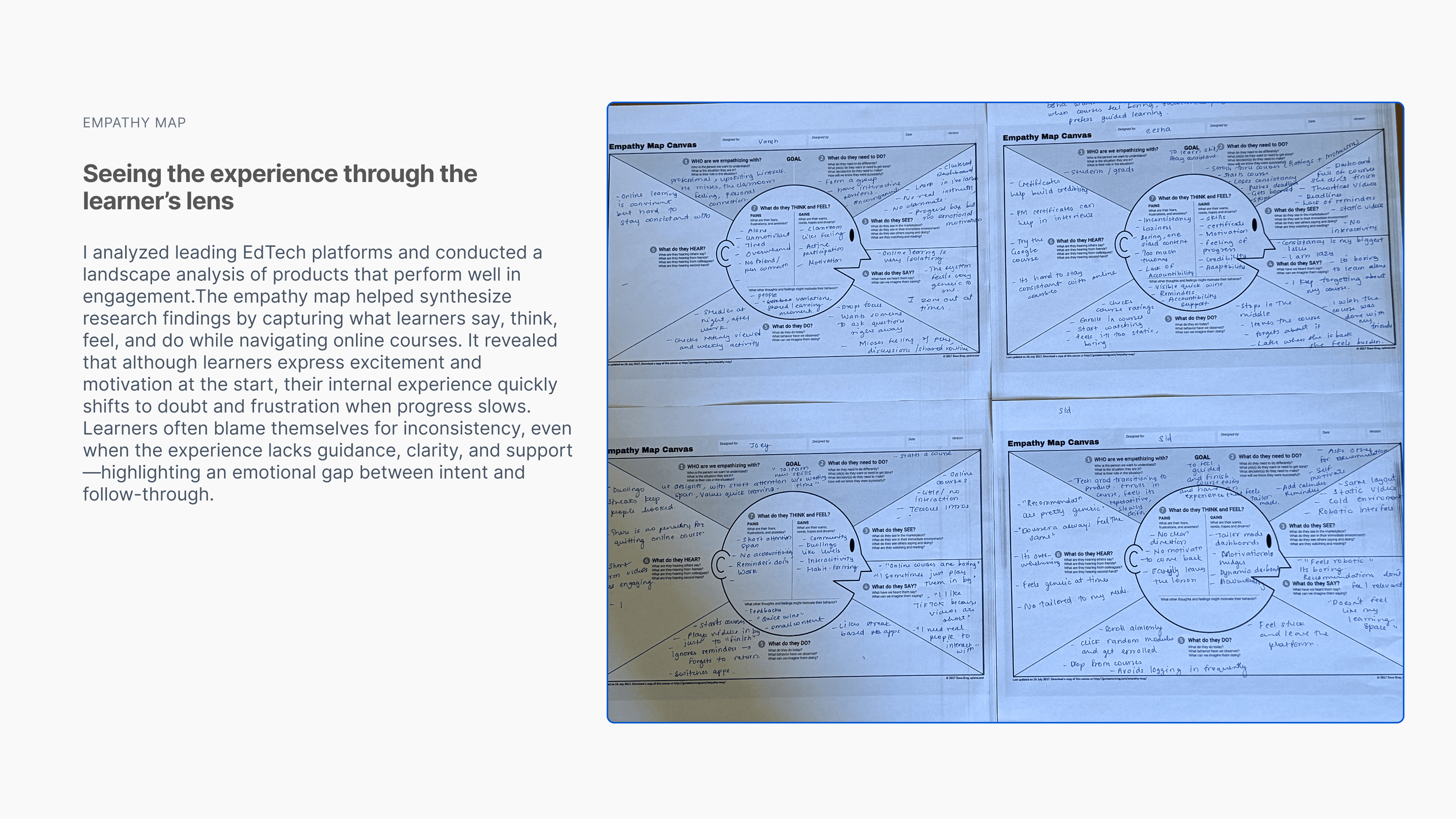
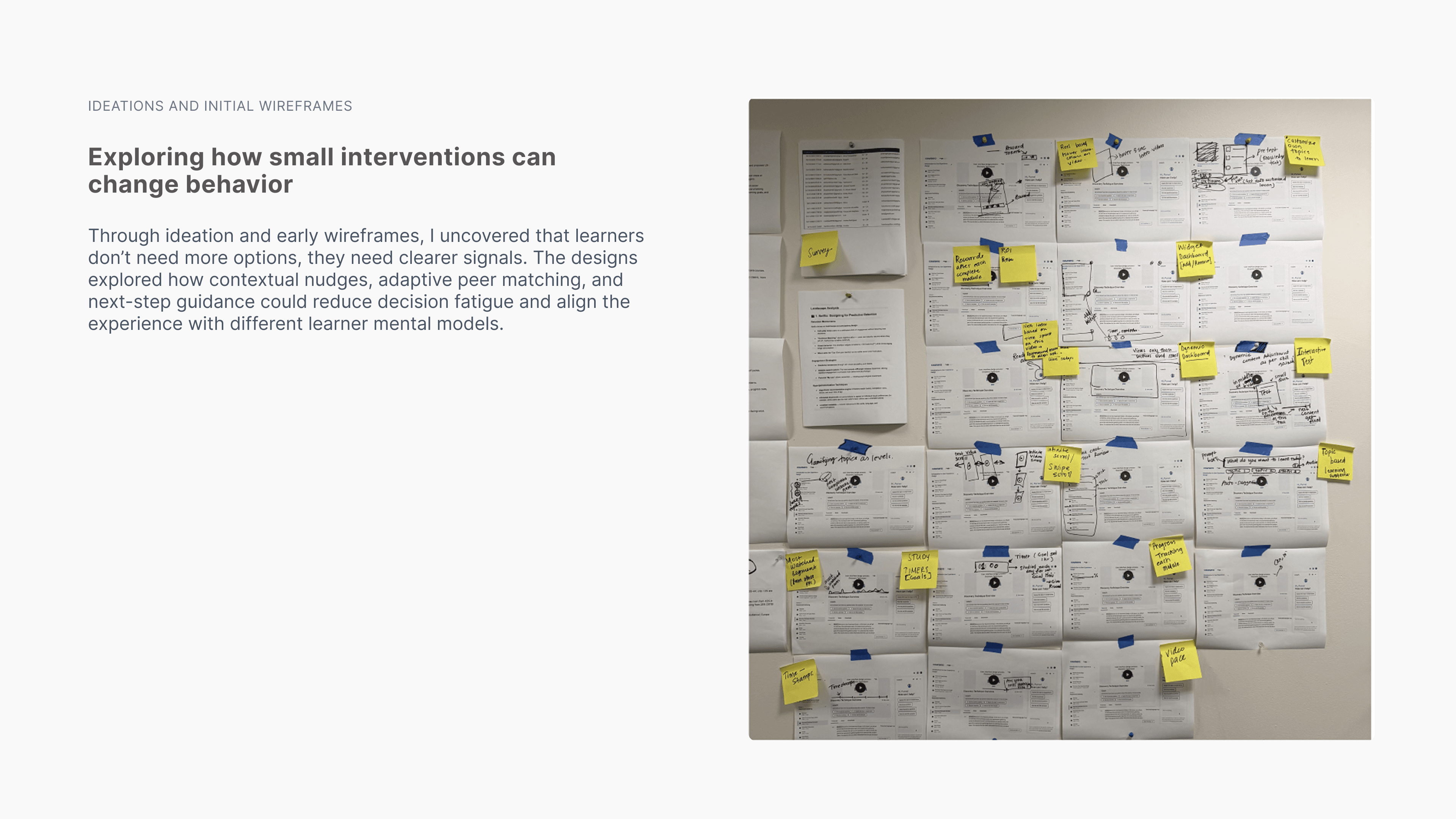
To understand the scale of the retention problem, I analyzed industry trends and platform behavior
Impact
From brief to live conversational product
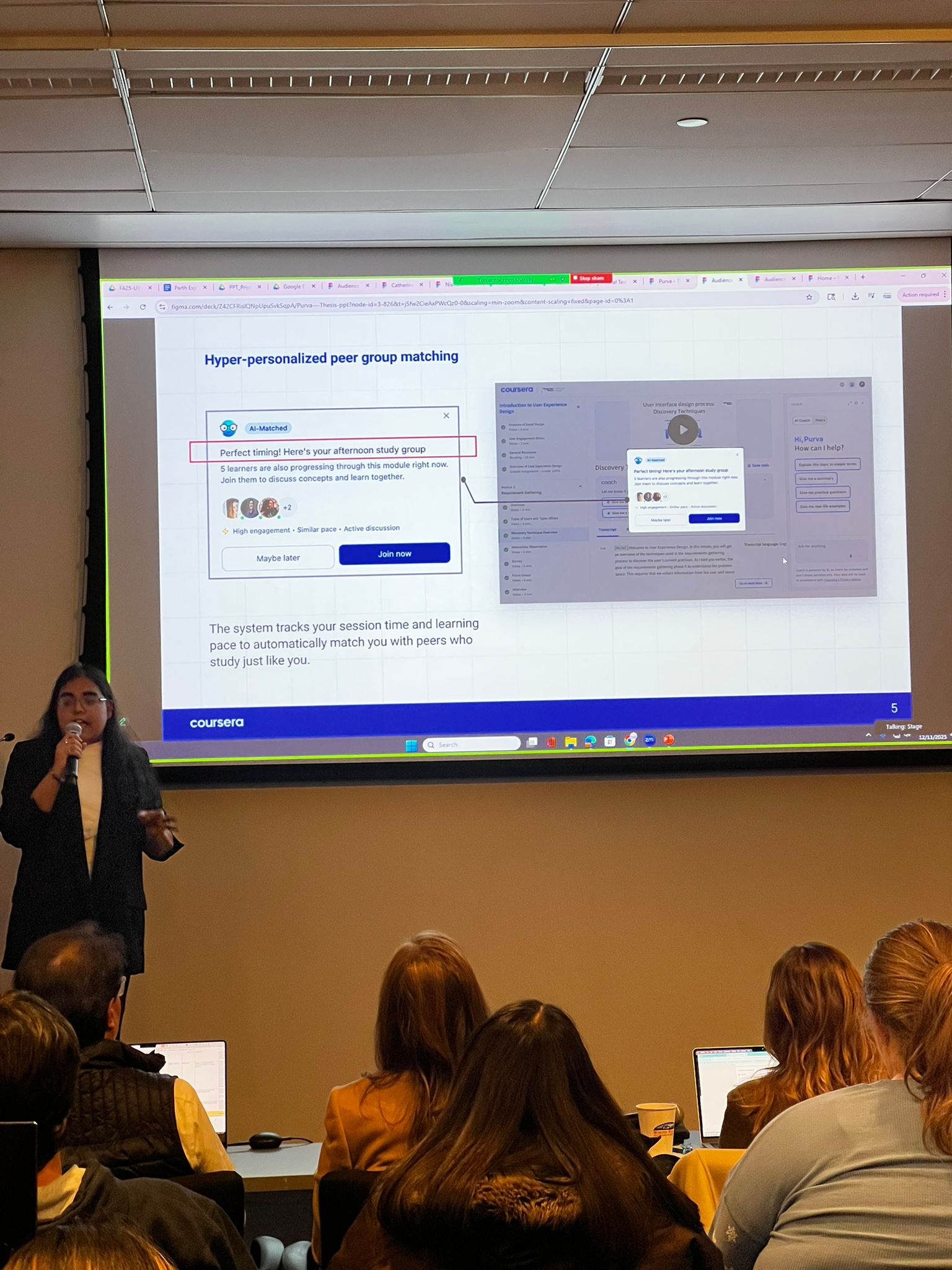
I successfully presented this project at the NYIT Thesis Winter Show 2025, where it sparked discussions around AI trust, learner autonomy, and retention-driven UX.
Reflections
This project changed how I think about personalization!
Designing for behavior, not assumptions
This project reinforced that good UX is not about predicting what users should do, but about responding to what they actually do. Observing real learner behaviors such as pausing, rewinding, or disengaging helped me design interventions that felt timely and relevant rather than generic or intrusive.
Hyper-personalization is about timing, not volume
This project showed me that hyper-personalization is effective only when it appears at the right moment. Personalizing too much or too often can feel intrusive, but subtle, timely support based on real behavior helps users feel understood rather than managed. Designing hyper-personalization became less about adding intelligence and more about respecting users’ attention and emotional state.
-UP NEXT-