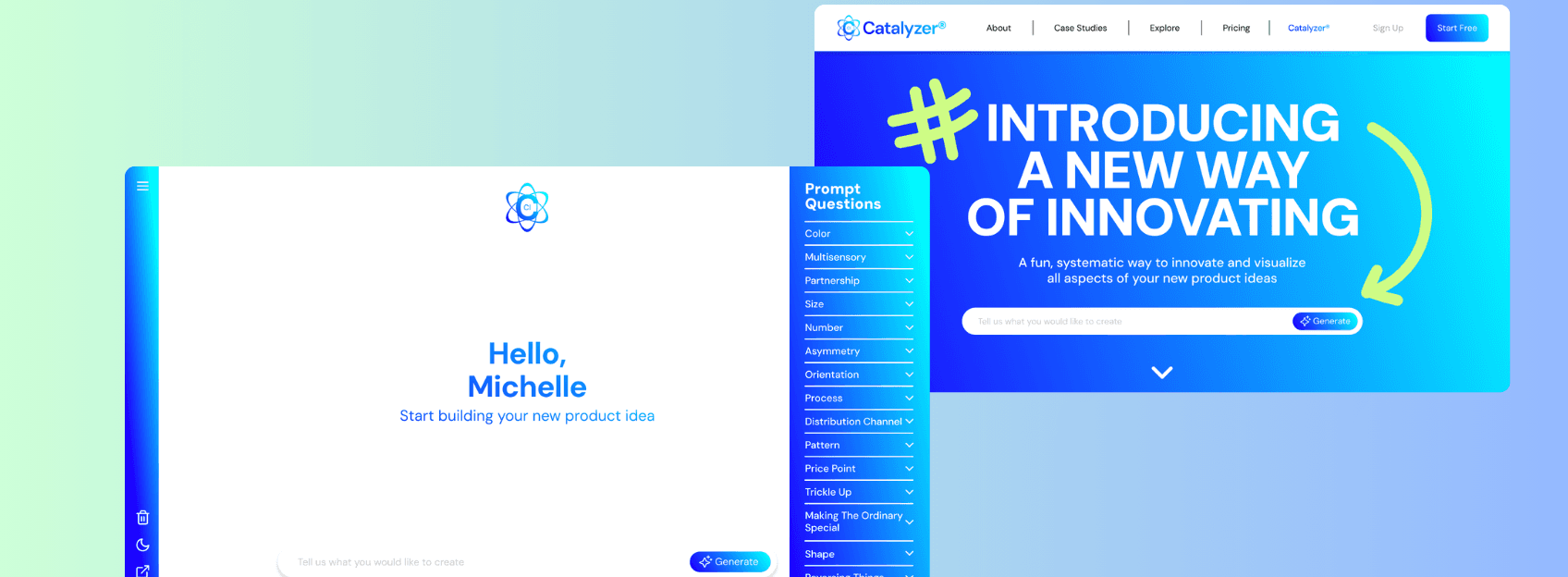
Catalyzer by Catalyzing Innovation
Most innovation tools give you a blank page. Catalyzer® gives you a conversation. This is the story of designing a GenAI conversational studio that transforms how businesses ideate, using 64 structured innovation types as the backbone of every exchange.
Timeline
3 months
Role
Product Designer
Team
3 Designers, 3 AI/ML Developers,
Michelle Greenwald (Founder)
Skills
UX design , prototyping, usability testing , A/B testing, Metrics evaluation
Problem
How might we help users use innovation types naturally while prompting?
Outcome
I designed the end-to-end conversational UI for the Catalyzer® GenAI Innovation Studio, including the prompt system, the 64 innovation type panel, conversation states, empty states, and the idea-to-image output flow alongside the marketing website that brings users into the produc
Final Design
A conversation that thinks like a strategist.
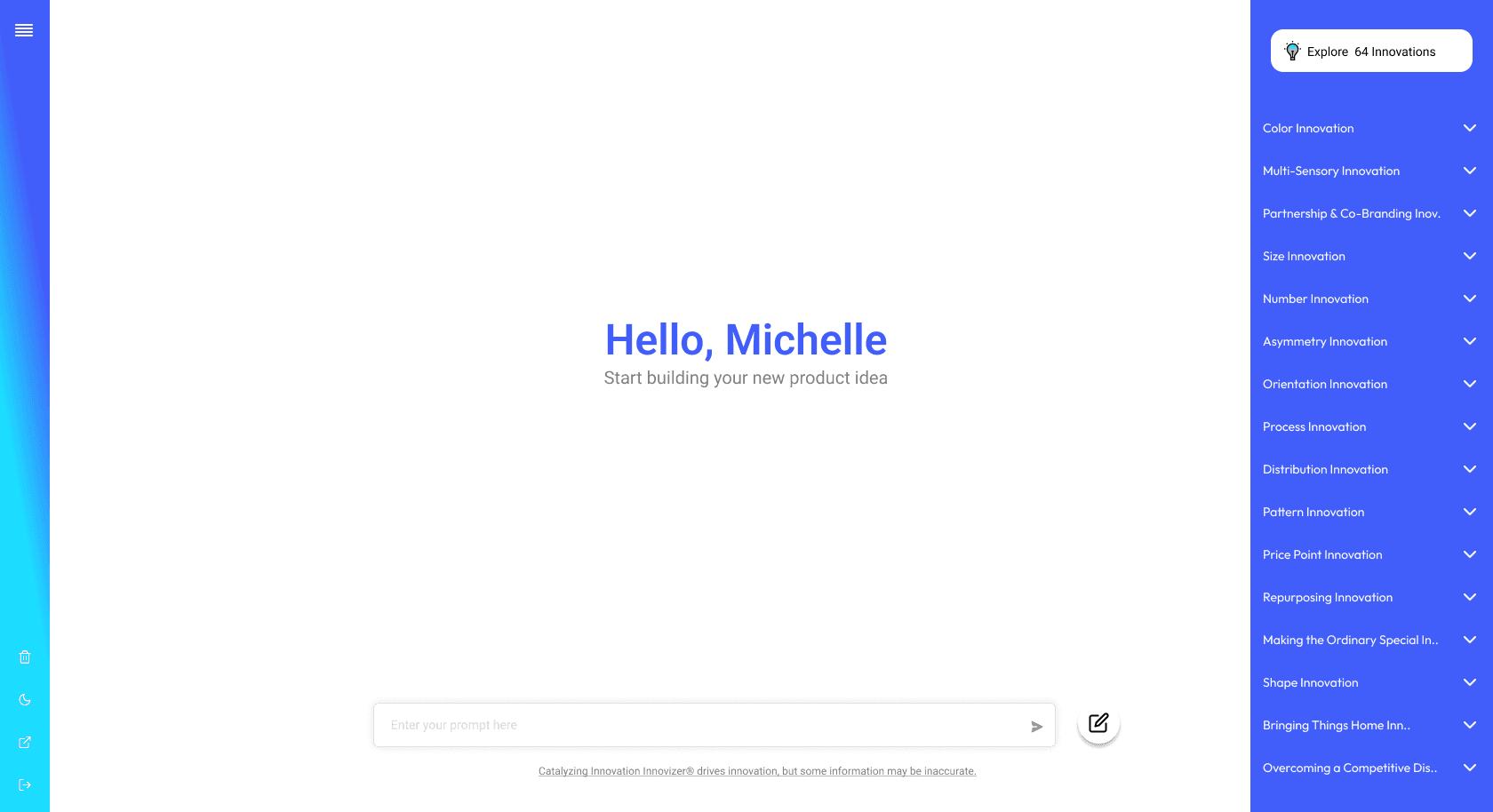
The Catalyzer® GenAI Innovation Studio
The studio opens to a personalized greeting and a single prompt bar. Nothing competes with the user's thinking. The right panel keeps all 64 innovation types permanently accessible — not hidden behind a menu — because research showed that users who browsed innovation types before prompting generated significantly richer ideas than those who went straight to the blank input.
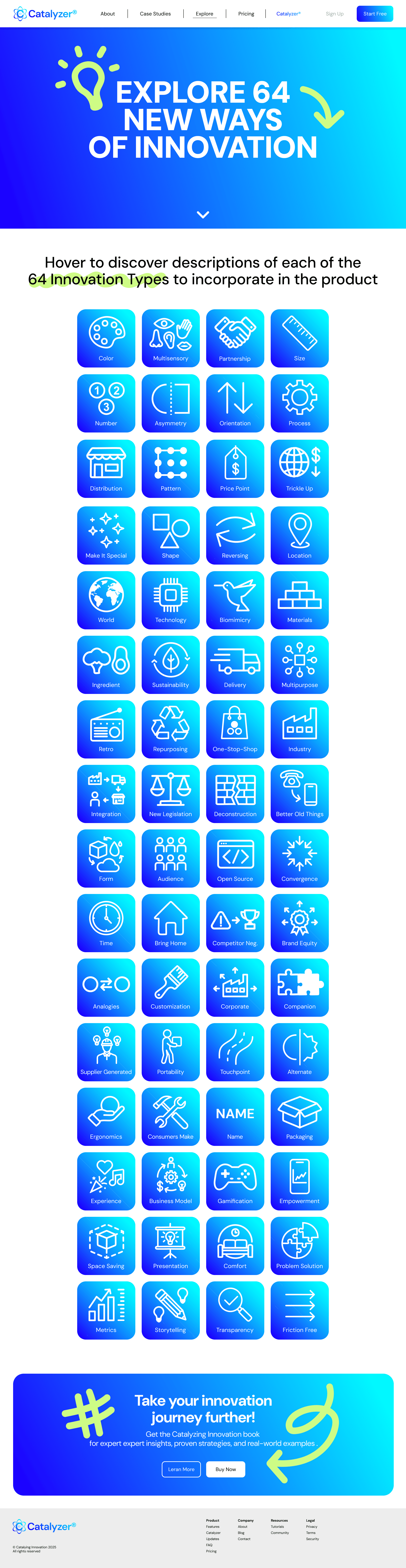
64 Types of Innovation
Each of the 64 innovation types expands to reveal an AI-generated prompt suggestion. These weren't written generically each one was crafted to show a concrete, industry-specific example of that innovation type in action. Color Innovation, for instance, suggests: "Develop a line of pastel-hued smart home devices with customizable color-changing LEDs for mood lighting and notifications." The prompt is a starting point, not a script.
The Process
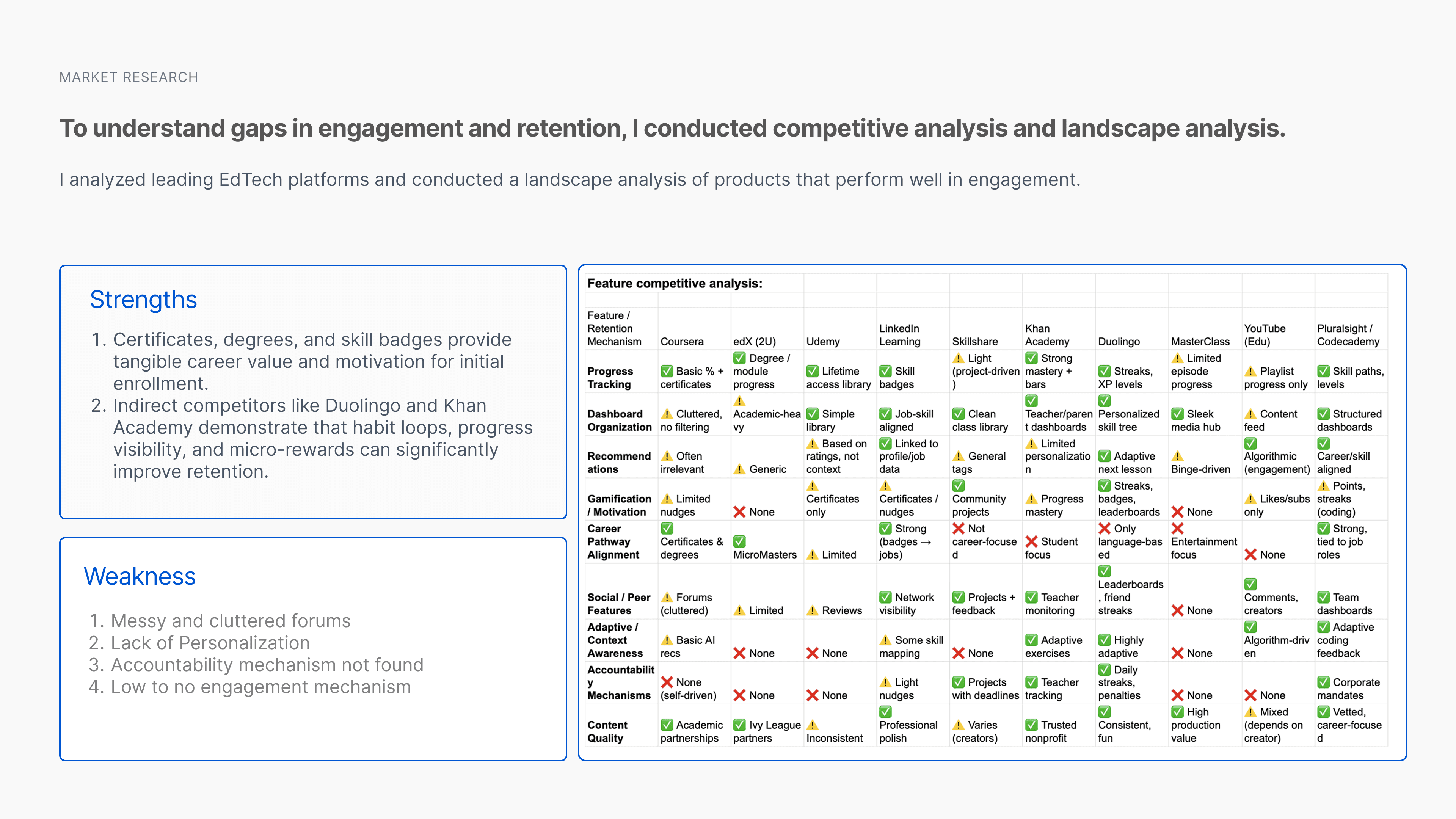
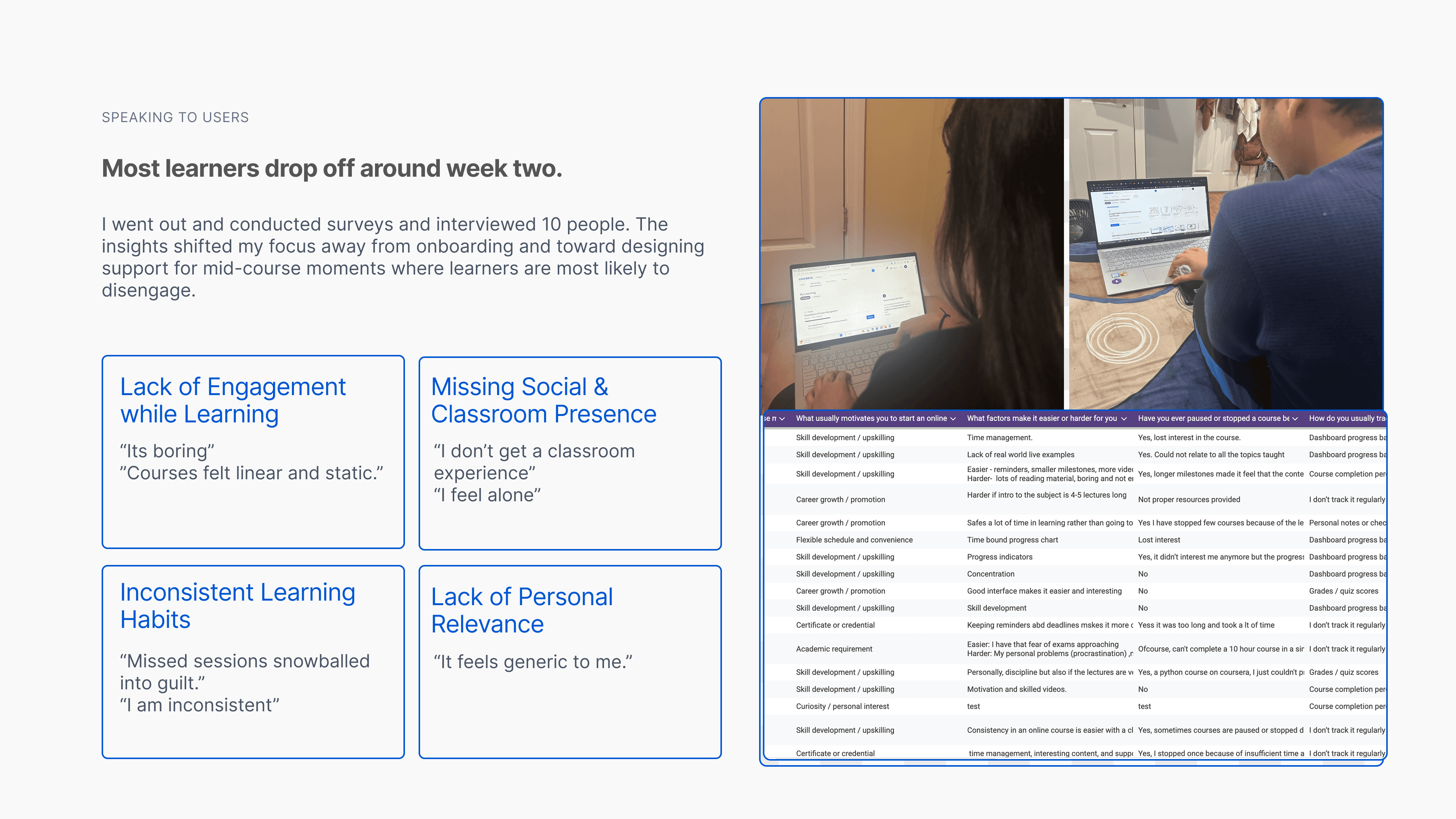
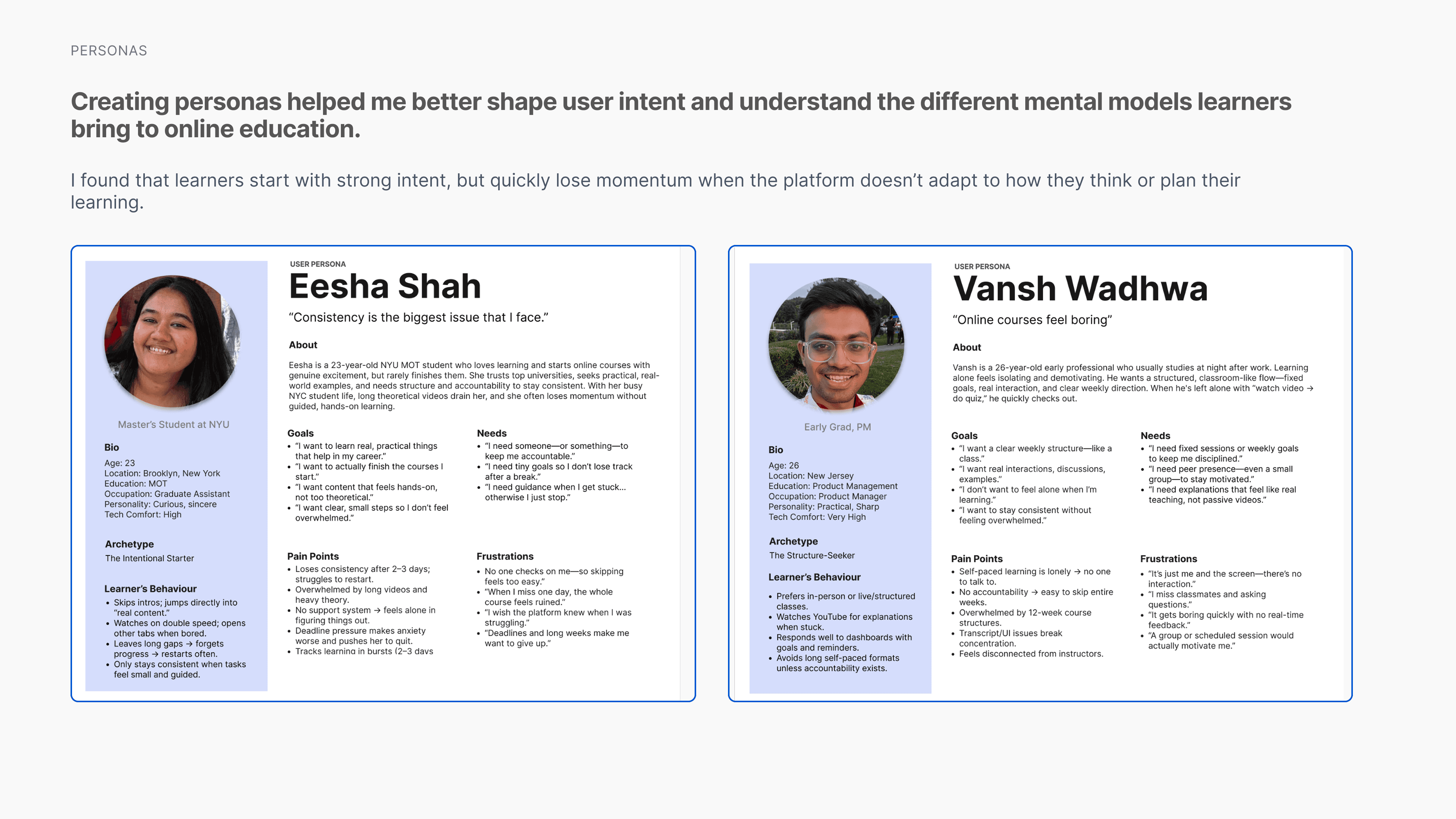
I started with understanding prompting
Impact
From brief to live conversational product
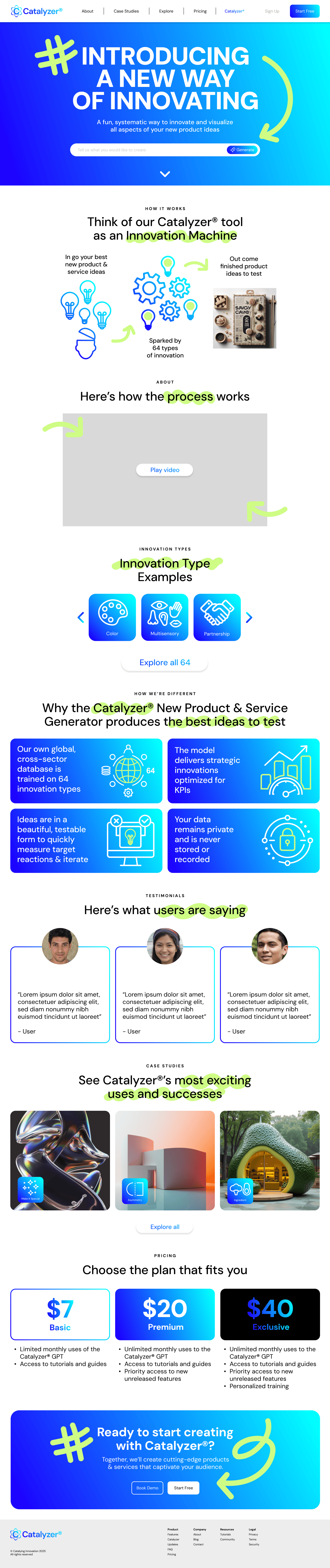
Catalyzer® is live at cicatalyzer.com.
Users who engaged with at least one innovation type before prompting generated concepts rated significantly higher in strategic specificity by an independent review panel. The platform is now used by marketers, founders, R&D teams, students, and hackathon participants across multiple industries.
Reflections
Designing a conversation is harder than designing a screen.
Structure is not the opposite of creativity, it's what makes creativity possible.
The biggest insight from the research was counterintuitive: the more structured the prompt scaffolding, the more original the outputs. Users given a specific innovation type to work with generated concepts that were more differentiated, more concrete, and more actionable than users given total freedom. Designing the 64 innovation types as a permanent, always-visible reference, rather than a hidden menu or an optional add-on, was the most important UX decision in the entire project.
-UP NEXT-